

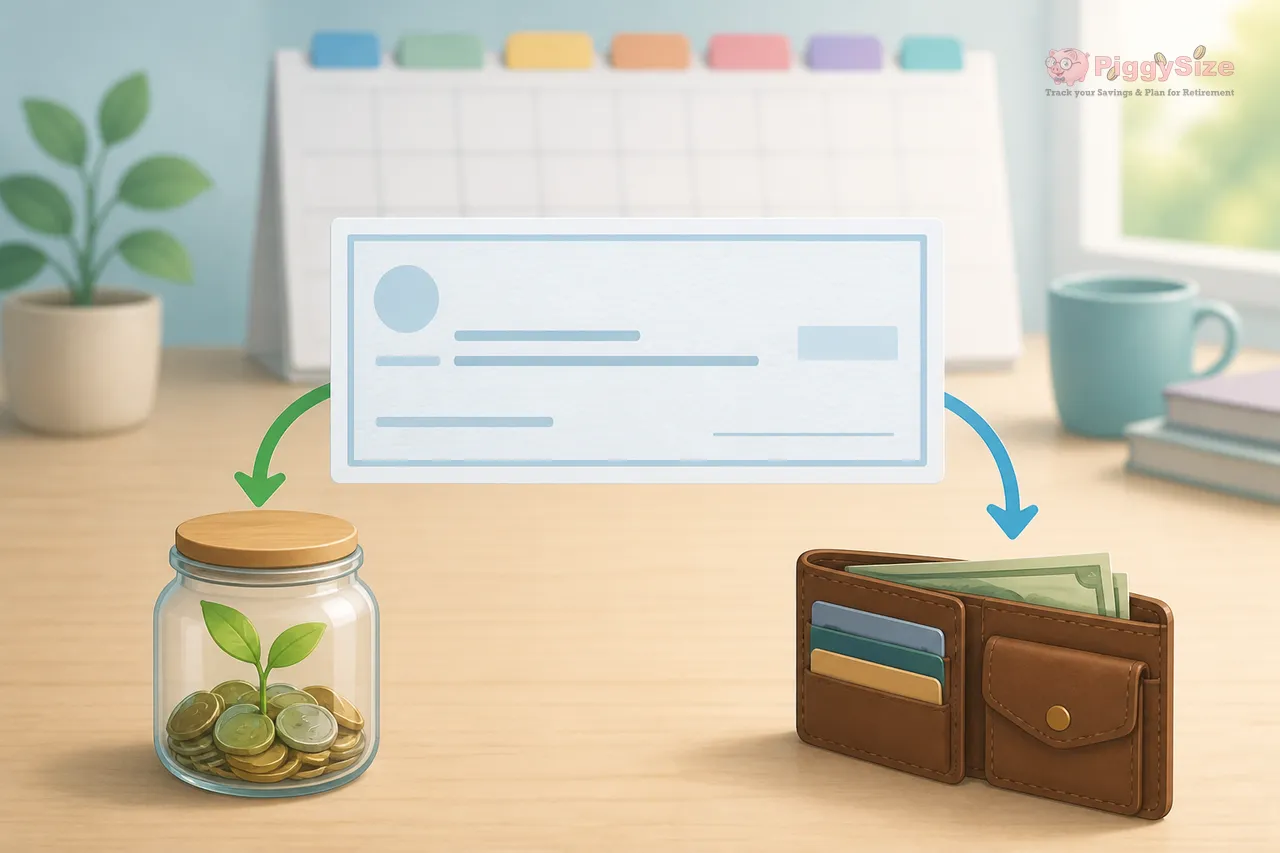
For most people, a tax refund isn't a bonus or a prize. It's your own money coming back: the amount you paid in during the year through paycheck withholding or estimated payments that turned out to be more than you actually owed. The one real exception is refundable credits, which can pay out more than you ever paid in.
A refund feels like a windfall because the overpayment happened in small, invisible slices — a little extra from every paycheck — and then lands as one lump sum. It's a big lump, too: the average refund was $3,276 through early May of the 2026 filing season, up 11.5% from a year earlier (IRS filing season statistics, 2026).
- A refund is mostly overpaid tax coming back to you — withholding or estimated payments that exceeded what you owed.
- Refundable credits (like the Earned Income Tax Credit) are the exception: they can produce a refund larger than the tax you paid.
- Withholding is controlled mainly by Form W-4, which you can update any time.
- Refunds and tax bills are two sides of the same gap — between what was withheld and what was owed.
- A large refund is often called an interest-free loan to the government, but many people use it on purpose as forced savings — both views are legitimate.
Where a refund actually comes from
Every paycheck, an employer withholds part of it and sends it to the IRS as a running down payment on that year's income tax, along with Social Security and Medicare taxes. People who are self-employed or have income without withholding make estimated tax payments instead.
At tax time, the return does the math:
- Total tax owed for the year is calculated from income, deductions, and credits.
- Total already paid in is added up from withholding and estimated payments.
- Refundable credits are added on the "paid" side, even if you never paid that money in.
- Paid in more than owed → the difference comes back as a refund.
- Paid in less than owed → the difference is a balance due.
Neither result is a penalty or a reward. It's arithmetic.
Note
A refund isn't guaranteed to reach you in full. Under the Treasury Offset Program, a federal refund can be reduced to cover past-due child support, federal debts like defaulted student loans, or state tax debts.
Refundable credits: the part that really is extra
Most credits can only cut your tax to zero. A few are refundable, meaning the leftover is paid out.
- The Earned Income Tax Credit and the refundable part of the Child Tax Credit are the big ones.
- For these households, a large refund can be well beyond what was withheld — it's a benefit delivered through the tax system.
- By law, the IRS can't issue refunds that include these two credits before mid-February, even for returns filed in January, under the PATH Act (IRS rules).
What Form W-4 actually controls
Form W-4 is the main lever behind how much comes out of each paycheck.
- It tells an employer how much tax to hold back, based on filing status, other jobs, dependents, and extra deductions you report.
- Since 2020 it no longer uses "allowances." It asks for dollar amounts instead — which is why old advice about claiming "0" or "1" no longer maps to the current form.
- It's a forecast, usually filled out before the year's real income is known, so some over- or under-shooting is normal.
- You can submit a new W-4 to your employer whenever your situation changes. The IRS Tax Withholding Estimator models how a change is likely to affect your refund or bill.
Why the same person's refund changes year to year
A refund isn't a fixed trait. It's the output of a moving calculation:
| What changed | Why it can move a refund |
|---|---|
| A bonus | Bonuses are often withheld at a flat 22% federal rate (IRS Publication 15). If your real marginal rate is 12%, that over-withholds and grows the refund; at 32% or higher, it under-withholds. |
| A second job, or both spouses working | Each employer withholds as if its paycheck were your only income, applying the standard deduction and low brackets again. Combined income is often under-withheld unless the W-4's multiple-jobs step is used. |
| Marriage, divorce, or a new dependent | Changes filing status and credit eligibility, shifting the tax owed. |
| A W-4 update | Directly changes how much comes out of each paycheck going forward. |
| Freelance or gig income | No withholding at all, plus self-employment tax — a common way a refund flips into a bill. |
| Tax law changes | New deductions or credits can raise refunds if withholding tables don't fully reflect them. |
Any one of these can move either side of the equation, so a refund that's large one year and small (or a bill) the next usually means nothing went wrong.
The flip side: owing, and when it costs extra
Owing a little at tax time is not a problem by itself. Owing a lot can add an underpayment penalty.
Generally, no penalty applies if (IRS, Form 2210 rules):
- You owe less than $1,000 after withholding and credits, or
- You paid in at least 90% of this year's tax, or
- You paid in at least 100% of last year's tax — 110% if last year's adjusted gross income was over $150,000.
That last rule is called a safe harbor — it's why many people with irregular income aim their withholding or estimates at last year's tax rather than guessing this year's.
Is a big refund good or bad? Both views are real
Reasonable people land on different sides here.
The case that a large refund is a missed opportunity:
- Overwithheld money earns no interest for you while the IRS holds it. The IRS only pays interest if it issues a refund more than 45 days after the later of the filing deadline or the date you filed (IRS).
- That money could have covered bills, paid down high-interest debt, or been saved during the months it was tied up.
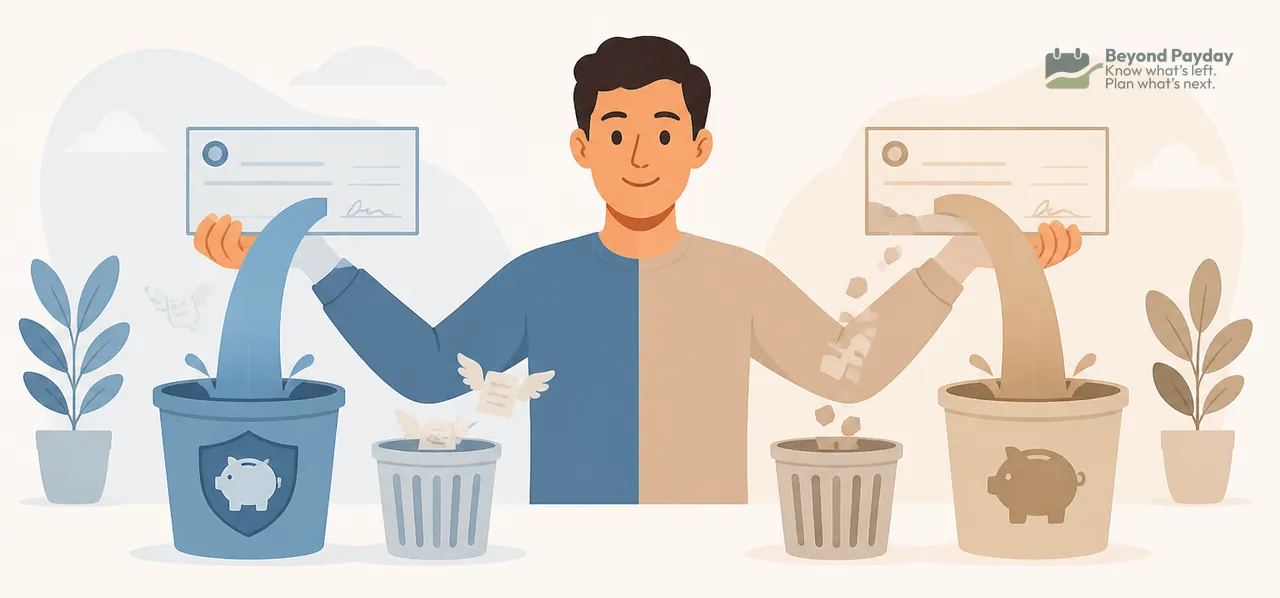
- Framed this way, a big refund is an interest-free loan to the government.
The case that a large refund is genuinely useful:
- For people who find it hard to save consistently, heavier withholding acts as forced savings — the money isn't there to spend paycheck to paycheck.
- One lump sum can make a specific goal easier — paying off a card, seeding an emergency fund, a big repair — than the same money trickling in a little each paycheck.
- A refund also means no surprise bill in April.
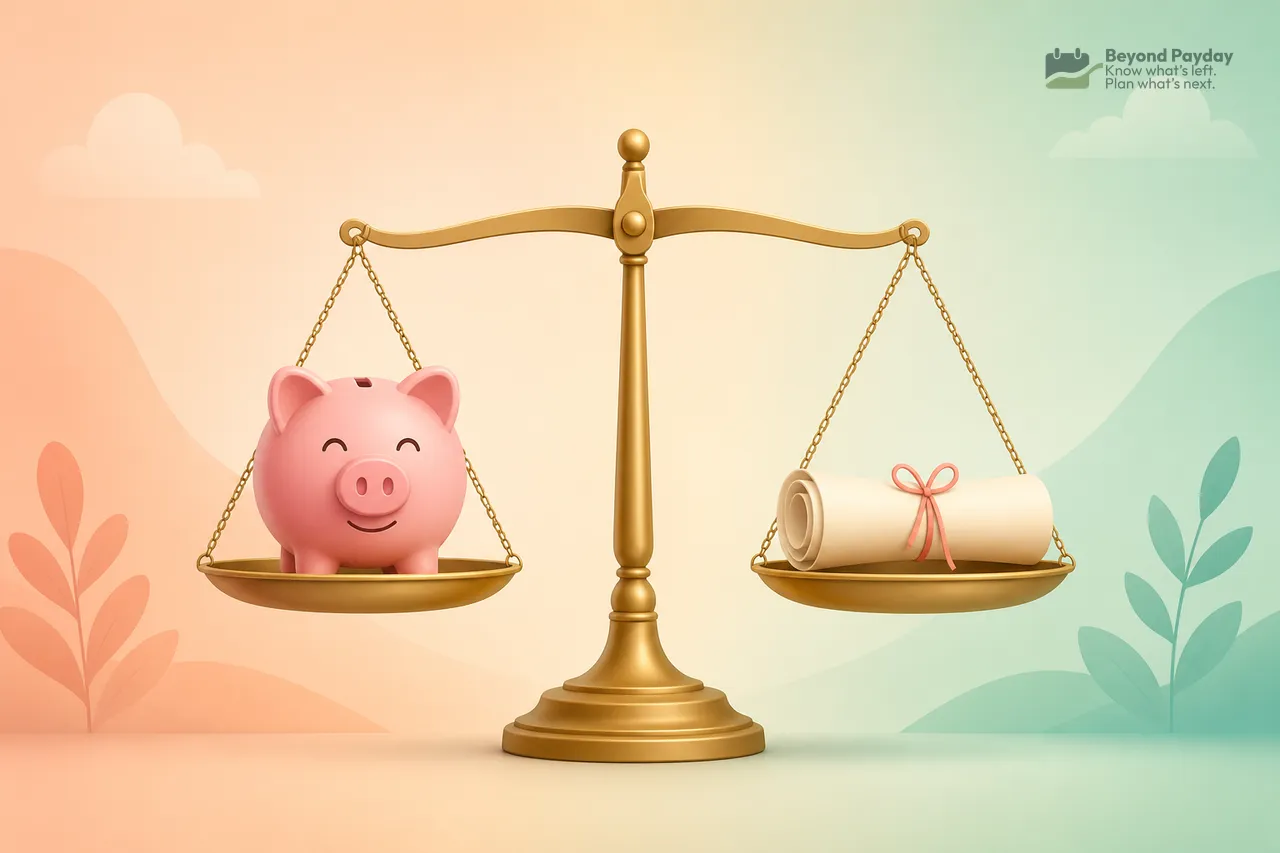
One view prioritizes the time value of money; the other prioritizes behavior. Which matters more is a personal call, not a math error.
An example
Illustrative numbers:
- Withheld during the year: $6,400
- Actual tax owed: $5,900
- Refund: $6,400 − $5,900 = $500
The next year, the same person picks up a side gig that nets $4,000, with nothing withheld. Their main-job withholding stays the same.
- Self-employment tax alone is about $565 (15.3% on 92.35% of the $4,000 profit).
- Income tax on the extra profit adds roughly $350 to $650 more at a 12% or 22% bracket, after the deductions for half of self-employment tax and qualified business income.
- Together that's roughly $900 to $1,200 of new tax, so last year's $500 refund likely flips into a balance due of several hundred dollars — with no change in the main job at all.
Real results depend on each person's income, deductions, and credits.
Adjusting withholding
Withholding isn't locked in for the year. It can be revisited whenever life changes — a new job, a raise, a marriage, a baby, a side business — with a new W-4 or by adjusting estimated payments. For anything specific to your income, deductions, or filing status, a CPA or tax professional can walk through the details.
Once a refund lands, the more useful question is often less "was my withholding perfect" and more "what happens to this money now."
FAQ
Is a tax refund free money from the government?
Usually not. Most refunds are money you already had withheld or paid in that turned out to be more than you owed; the exception is refundable credits like the Earned Income Tax Credit, which can pay out more than you paid in.
Why did my refund change from last year to this year?
Refunds change when the gap between what's withheld and what's owed changes — common causes include a pay raise, a new job, a second income, a life event like marriage or a new dependent, or a change made on Form W-4.
Does the IRS pay interest on my refund?
Only if the refund is late: the IRS generally pays interest when it issues a refund more than 45 days after the later of the filing deadline or the date you filed. A refund issued on a normal timeline earns no interest.
Can I change my withholding in the middle of the year?
Yes. Employees can give their employer a new Form W-4 at any point in the year, and the IRS Tax Withholding Estimator can model how a change is likely to affect future paychecks and the refund.
Is getting a big refund a bad financial decision?
It depends on what someone values — some see a large refund as an interest-free loan to the government, while others use it deliberately as a forced-savings tool; both views are common and there's no single right answer.
Related reading
Why is my paycheck so much smaller than my salary?
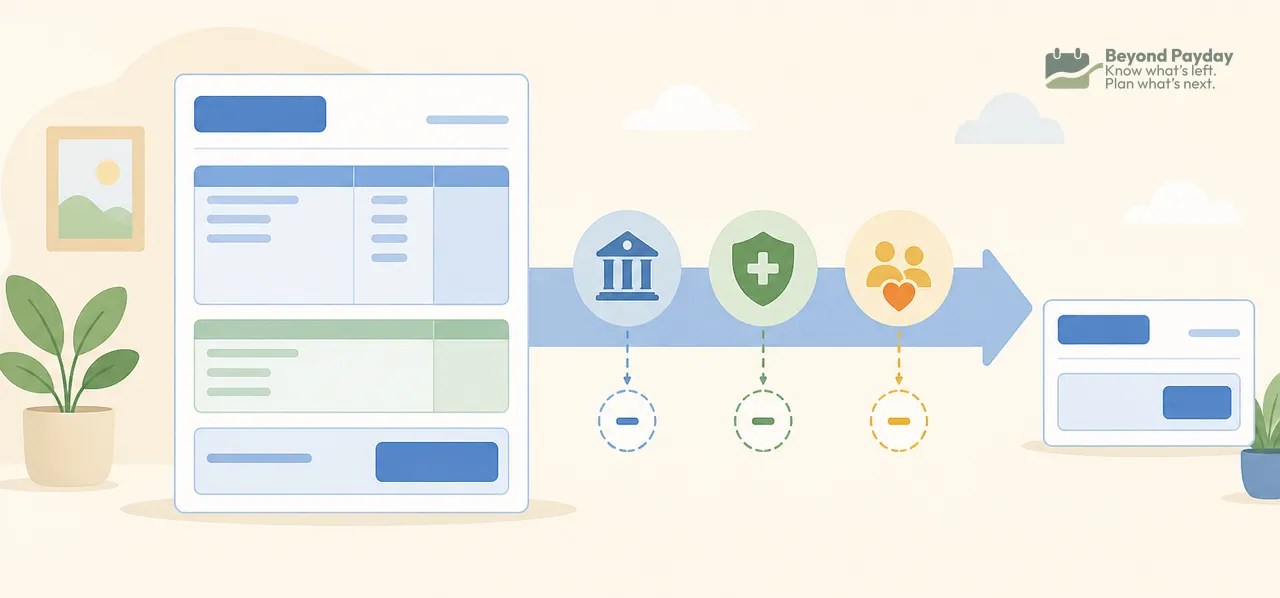
Your salary is a yearly number; your paycheck is what's left after taxes and benefits come out of each pay period. Here's a line-by-line walk from gross pay to net pay, so nothing on your stub is a mystery.
Pre-tax vs post-tax payroll deductions: what's the difference?
A $200 pre-tax deduction doesn't cost you $200 of take-home pay — but it doesn't disappear from the IRS's radar forever either. Here's how each bucket actually works.

Will a raise push me into a higher tax bracket and cost me money?
No — a raise can't shrink your take-home pay through brackets alone. The US income tax is graduated, so a higher bracket only taxes the income above its threshold, never your whole paycheck.
Beyond Payday is a planning tool, not a financial advisor. This article is educational — projections and examples are estimates, not financial, tax, or investment advice.