
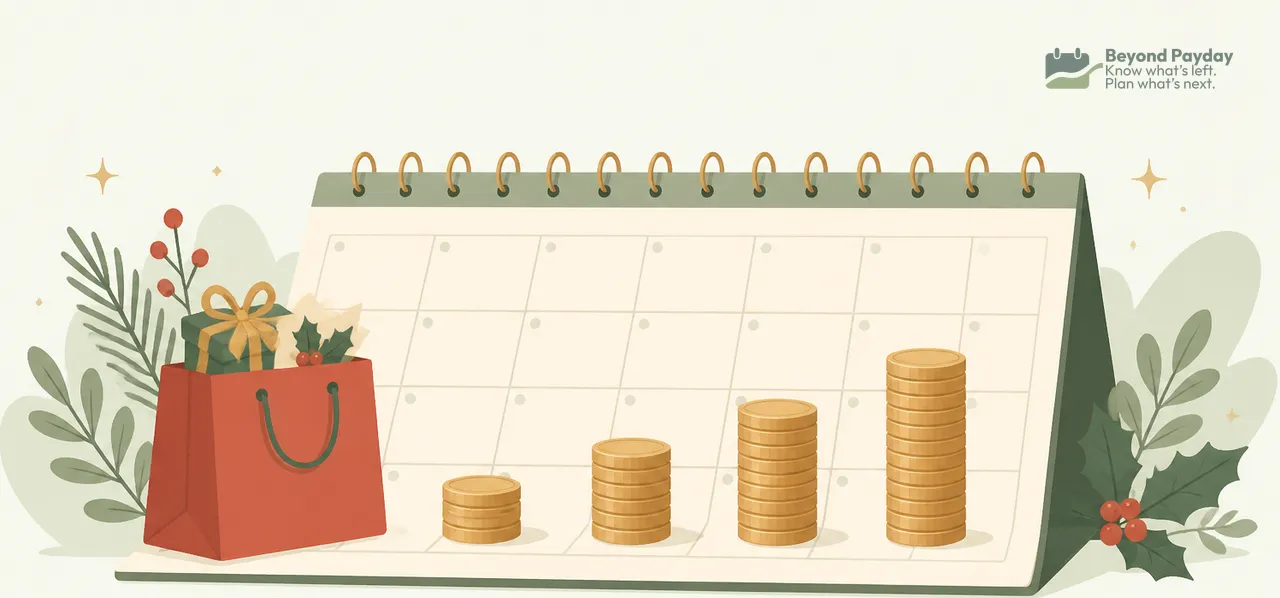
A standard "pay in 4" buy now, pay later plan costs nothing extra if every payment lands on time. You pay about a quarter up front and the rest in three more payments, usually two weeks apart. The real costs show up around the edges: late fees, bank overdraft fees when an autopay hits an empty account, interest on longer monthly plans, and several small plans that all come due in the same January weeks.
- Pay-in-4 is usually interest-free; longer monthly plans often aren't. The APR is in the loan terms before you agree.
- Late is common. In the Federal Reserve's 2025 survey, 26% of BNPL users paid late at least once in the past year.
- Stacking is the holiday risk. Plans started in late November and December can pile their last payments into January.
- Credit reporting is changing. FICO has built scores that count BNPL loans, but lenders choose when to use them. Missed payments can already hurt you if they're reported or sent to collections.
- Federal card-style protections don't automatically apply. The CFPB withdrew its 2024 rule that would have treated BNPL like credit cards.
The two kinds of buy now, pay later
"Buy now, pay later" covers two quite different products. The checkout button can look the same for both.
| Pay in 4 | Longer monthly plan | |
|---|---|---|
| Typical shape | 25% up front, then three payments every two weeks | Monthly payments over several months to a few years |
| Interest | Usually none | Often charged; shown as an APR |
| Typical use | Clothes, gifts, smaller items | Furniture, electronics, bigger purchases |
| Main cost risk | Late fees, overdrafts | Interest, plus late fees |
- The CFPB's 2022 market report defines classic BNPL as the pay-in-4 product. It describes longer point-of-sale loans as a separate kind, used for bigger purchases with terms up to three or four years.
- A longer plan can be 0% or charge interest. The rate depends on the lender, the store's promotion and your credit.
What it costs when everything goes right
Pay-in-4 on time costs nothing beyond the purchase price. A longer plan costs whatever its APR says.
Example (illustrative numbers only):
| $1,200 purchase over 12 months | Monthly payment | Total interest |
|---|---|---|
| 0% APR plan | $100.00 | $0 |
| 30% APR plan | about $116.98 | about $203.81 |
- At 30%, the same TV or couch costs about 17% more than its price tag.
- The APR is in the loan terms before you accept. It's the one number that tells you whether "pay over time" is free or not.

Where the real costs hide
Most of the cost of BNPL comes from things going slightly wrong. Here's what that looks like in data.
- Late payments. The Federal Reserve's 2025 household survey found 26% of BNPL users were late on a payment in the prior year. About 64% of those late payers said they were charged extra.
- Late fees. The CFPB says that while many BNPL loans charge no interest, most charge late fees, and each lender sets its own. In the CFPB's December 2025 report on six large pay-in-4 lenders, about 4.1% of loans at the lenders that charge late fees had one in 2023.
- Bank fees. In the same Fed survey, 11% of BNPL users had a BNPL payment trigger an overdraft or NSF fee. Autopay pulls the money whether or not your paycheck has landed.
- Frozen accounts and collections. If you miss payments, the CFPB says the lender may block new purchases and send the debt to a collector.
- Returns. Returns are common: the CFPB found 13.7% of BNPL loans in 2021 involved returning at least part of the order, and its 2022 report flagged returns and disputes as a weak spot. It's worth knowing how a lender handles a refund before a payment is due.
Watch out
A late fee feels small, but it's measured against a small payment. A $10 fee (example) on a $50 installment is 20% of that payment, which is costlier than most credit card interest for the same few weeks.
Stacking: how December plans land in January
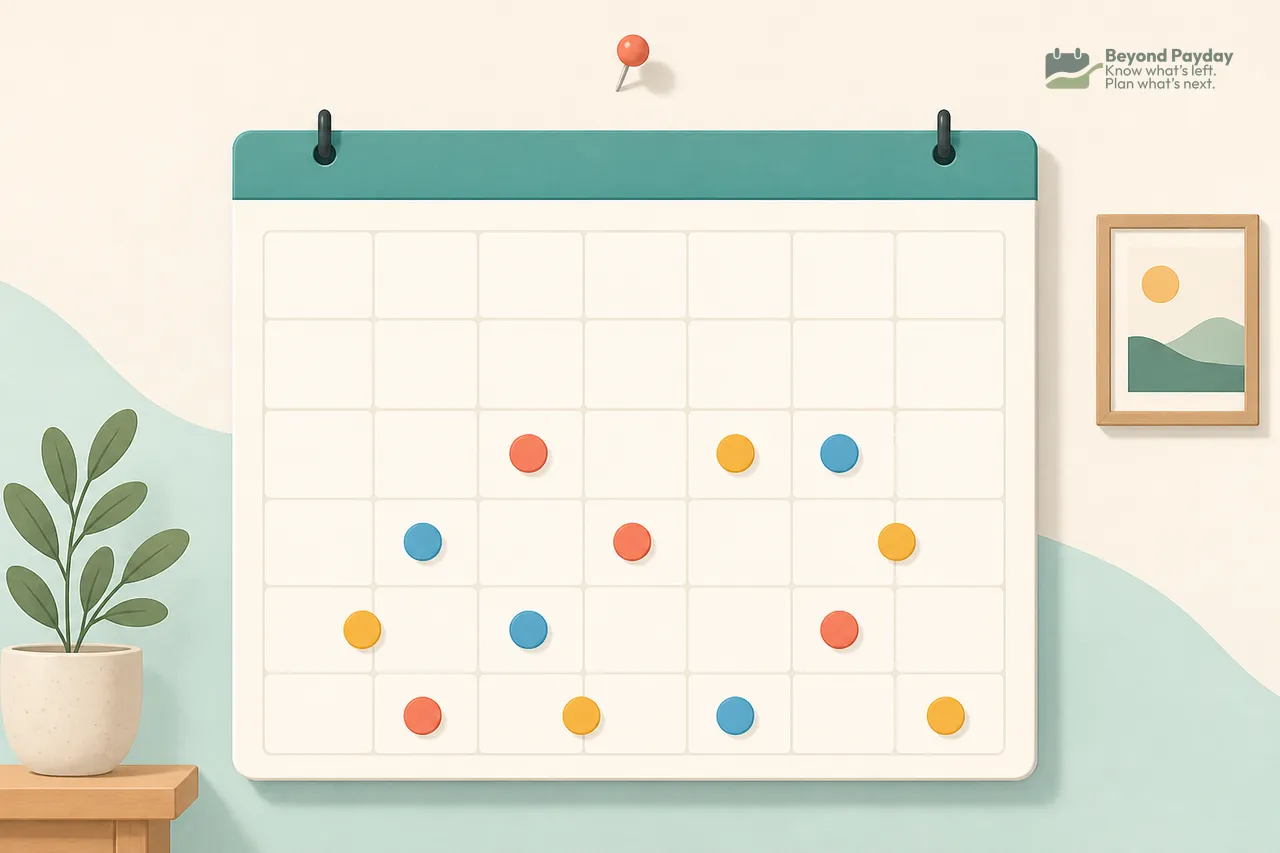
Each plan looks tiny on its own. Together they can crowd one paycheck. That's the pattern regulators have flagged.
- The CFPB found in 2025 that about 63% of BNPL borrowers had more than one loan open at the same time during the year, and 33% borrowed from more than one BNPL company (2022 data).
- Different apps, different due dates. No single statement shows them all together, the way a credit card bill does.
- Holiday timing. Because pay-in-4 runs about six weeks, anything bought from late November on finishes in January.
Example: three holiday purchases split into four payments each (illustrative):
| Purchase | Payments of | Due dates |
|---|---|---|
| $200 on Nov 27 | $50 | Nov 27 · Dec 11 · Dec 25 · Jan 8 |
| $400 on Dec 4 | $100 | Dec 4 · Dec 18 · Jan 1 · Jan 15 |
| $160 on Dec 15 | $40 | Dec 15 · Dec 29 · Jan 12 · Jan 26 |
- January total from these three plans: $330, spread over five separate due dates.
- That's on top of December's credit card statement and any bills that reset in January.
Does BNPL affect your credit score in 2026?
Short answer: on-time pay-in-4 payments mostly haven't helped scores yet, but missed payments can hurt. The picture is shifting.
- Most users misunderstand this. In the Fed's 2025 survey, 53% of BNPL users wrongly believed on-time BNPL payments helped their credit score. Only 14% answered both credit questions correctly.
- New scores exist. In March 2026, FICO described FICO Score 10 BNPL and FICO Score 10T BNPL, which group several open BNPL loans together so a burst of small loans doesn't look riskier than it is. FICO says they'll be available as BNPL data reaches credit reports at scale, and each lender decides when to use them.
- Early tests suggest small moves. FICO's simulation found 85% of BNPL users' scores changed by fewer than 10 points.
- Pay-in-4 loans have mostly stayed off credit reports so far. A CFPB 2023 report noted that the pay-in-4 loans it studied didn't appear in the credit bureau data it used.
- Collections are a separate risk. A debt sent to collections and reported can lower your scores no matter which scoring model a lender uses.
What the CFPB has said in 2025–2026
Federal rules for BNPL loosened in 2025. That puts more weight on each lender's own terms.
- In 2024 the CFPB issued an interpretive rule saying many BNPL lenders should give users some of the same dispute and refund rights credit card users get.
- On May 12, 2025, the CFPB withdrew that rule along with other guidance documents.
- The practical effect: refund, dispute and late-fee rules come mostly from your loan agreement and state law, not a single federal standard. Reading the terms matters more than it does with a credit card.
BNPL vs. a credit card for a holiday purchase
Neither is automatically cheaper. It depends on whether you'd carry a balance.
| Pay-in-4 BNPL | Credit card | |
|---|---|---|
| Interest if paid on schedule | Usually none | None if you pay the full statement balance by the due date |
| Interest if you fall behind | None on pay-in-4, but late fees | Card APR, averaging 22.36% on accounts charged interest in Q3 2026 (Federal Reserve) |
| Dispute rights | Set by the lender's terms | Federal billing-dispute rights; the FTC says to dispute within 60 days of the first bill showing the error |
| One view of everything owed | No, each plan is separate | Yes, one statement |
How BNPL fits different situations
Who uses it and why varies a lot. The Fed found 22% of adults under 30 used BNPL in the prior year, versus 9% of those 60 and older.
| Situation | Where BNPL can work | Where it can backfire |
|---|---|---|
| Steady paycheck, money already set aside | Splitting a planned gift into four payments at 0% | Using it for extras because each payment looks small |
| Already carrying credit card debt | Little room to help; it's another debt | Adds due dates on top of card minimums |
| Irregular income | Hard to time with uneven pay | Autopay landing before income does |
| Buying groceries or basics | A short-term bridge in a real pinch | Adds due dates on top of an already tight month; the Fed found 1 in 5 BNPL users used it for groceries or food delivery |
| Parent buying several gifts | One plan for one big gift | Several plans across stores and apps |
A quick check before you tap "pay later"
Key point
- Is it pay-in-4 or a monthly plan? What's the APR?
- What's the late fee, and can it be charged more than once?
- Which account does autopay pull from, and on what dates?
- How are returns handled, and do payments pause while a refund is processed?
- How many other plans are open right now, and what's the January total?
Buy now, pay later is a payment schedule, not extra money. Plans that fit the next few paychecks tend to stay cheap; plans that stack up tend to cost the most. Listing every open plan with its due dates, next to your card bills, is the simplest way to see January coming.
FAQ
Does buy now, pay later charge interest?
Standard pay-in-4 plans usually don't. Longer monthly plans often do, and the APR appears in the loan terms before you accept.
Does BNPL affect my credit score?
On-time pay-in-4 payments generally haven't counted in scores, but FICO has built BNPL-aware scores that lenders can choose to use as the data reaches credit reports. Missed payments that are reported or sent to collections can lower scores.
What happens if I miss a BNPL payment?
The CFPB says most BNPL lenders charge late fees, may block new purchases, and may send unpaid debt to a collector. Fees and policies vary by lender.
How common are late BNPL payments?
In the Federal Reserve's 2025 household survey, 26% of BNPL users said they were late on a payment in the prior year.
Do BNPL loans have the same protections as credit cards?
Not automatically. The CFPB withdrew its 2024 rule applying credit card dispute and refund rights to BNPL on May 12, 2025, so the lender's terms and state law matter more.
Related reading
How to get out of credit card debt
Stop new charges from piling up, understand exactly what you owe, then pick a payoff method and a way to lower the interest rate working against you. Here's the full playbook.

Debt avalanche vs snowball: which pays off debt faster?
The avalanche method saves the most money by targeting high-interest debt first; the snowball method builds momentum by clearing small balances first. Here's the real math behind both.
How to keep track of all your bills
A step-by-step way to find every bill you actually owe, list it in one place, and turn that list into a calendar so nothing slips through the cracks.
Beyond Payday is a planning tool, not a financial advisor. This article is educational. Projections and examples are estimates, not financial, tax, or investment advice.