

The debt avalanche pays off the debt with the highest interest rate first, which minimizes the total interest you pay over time. The debt snowball pays off the smallest balance first, which tends to keep people motivated because they clear whole debts faster. In pure dollar terms, avalanche usually wins. In terms of who actually finishes the payoff plan, snowball often wins — because sticking with it matters more than shaving a few dollars off the math.
- Avalanche minimizes total interest by targeting the highest-APR debt first.
- Snowball maximizes motivation by clearing the smallest balance first, giving you a quick, visible win.
- The dollar gap between methods is often small when your debts carry similar rates, and large when one debt's rate is much higher than the rest.
- Minimum payments are identical either way — only the extra payment amount moves.
- The method you'll actually finish beats the method that's technically optimal on paper.
How the debt avalanche works
- List every debt with its balance, interest rate, and minimum payment.
- Sort by interest rate, highest to lowest.
- Pay the minimum on everything except the top debt.
- Send every extra dollar to the highest-rate debt until it's gone.
- Roll that entire payment — minimum plus extra — onto the next-highest-rate debt, and repeat.
Key point
The engine behind the avalanche is simple: interest is a percentage of what you owe, so the debt charging the highest percentage is bleeding you the fastest. Killing it first stops the biggest leak.
How the debt snowball works
- List every debt with its balance, interest rate, and minimum payment.
- Sort by balance, smallest to largest — ignore the interest rate entirely.
- Pay the minimum on everything except the smallest balance.
- Send every extra dollar to the smallest debt until it's gone.
- Roll that payment onto the next-smallest balance, and repeat.
The snowball method is popular in part because personal finance is behavioral, not just mathematical: crossing a debt off the list entirely — even a small one — creates a sense of progress that a shrinking balance on a big loan doesn't.
Avalanche vs snowball, side by side
| Debt avalanche | Debt snowball | |
|---|---|---|
| Sorts debts by | Interest rate (highest first) | Balance (smallest first) |
| Total interest paid | Lowest possible | Usually somewhat higher |
| Time to first debt cleared | Depends on rate order | Fastest — clears smallest balance first |
| Best for | People motivated by math and long-term savings | People who need visible wins to stay consistent |
| Risk | Can feel slow if the highest-rate debt is also the largest | Can cost more in interest if a huge balance sits at a high rate |
When avalanche wins by a lot
The avalanche's advantage grows with the spread between your interest rates:
- A credit card at 24% APR next to a car loan at 6% APR — avalanche saves meaningfully more, because that card is compounding far faster than anything else you owe.
- Multiple cards with balance transfer or promotional rates sitting near 0% next to a card at a standard rate — avalanche correctly ignores the low-rate balances and hammers the expensive one.
- Larger overall debt loads, where even a percentage-point difference compounds into real money over a multi-year payoff.
When snowball wins in practice
The snowball's advantage shows up when behavior, not math, is the limiting factor:
- You've started and abandoned a payoff plan before.
- Your debts have similar interest rates, so the avalanche's math edge is negligible anyway.
- You have many small debts (medical bills, old store cards) cluttering the list — clearing several of them fast reduces mental overhead and the number of payments you're tracking.
- You respond well to visible milestones and risk losing steam without them.
Tip
If you're not sure which type you are, look at your history with gym memberships, diets, or savings challenges. If you've stuck with structured, delayed-reward plans before, avalanche's math will probably hold your interest. If you've abandoned plans that took too long to show results, snowball's quick wins are the safer bet.
Mistakes people make with either method
- Not listing every debt first. Skipping a small medical bill or an old store card undermines both methods — you need the full picture before sorting.
- Forgetting the minimums. Extra payments only work if every other debt's minimum is still being paid; missing a minimum on a "lower priority" debt can trigger fees or credit damage that erase your progress.
- Not rolling payments forward. The power of both methods comes from combining a cleared debt's payment with the next target's minimum. Stopping that habit once one debt is gone slows the whole plan down.
- Switching methods every few months. Constantly re-sorting the list based on mood, rather than picking one approach and running it, adds confusion without adding savings.
- Ignoring a 0% promotional period's expiration date. A balance transfer or promotional card can flip from 0% to a high standard rate; failing to track that date can quietly turn a "low priority" debt into the most expensive one on the list.
- Comparing methods using only starting balances, not the full amortization. A small, high-rate debt can end up costing more in total interest than a larger, low-rate one — sorting correctly requires the actual rate, not a guess.
An example with real numbers
Say you have three debts and $150 a month in extra cash beyond the minimums:
| Debt | Balance | APR | Minimum |
|---|---|---|---|
| Store card | $2,400 | 27% | $60 |
| Credit card | $1,200 | 22% | $40 |
| Personal loan | $6,000 | 9% | $150 |
Avalanche order: store card (27%) → credit card (22%) → personal loan (9%). Extra $150 goes to the store card first.
Snowball order: credit card ($1,200, smallest) → store card ($2,400) → personal loan ($6,000). Extra $150 goes to the credit card first.
In this example, the smallest balance also happens to carry the second-highest rate, so the two methods only diverge on which debt gets attacked first — the store card vs. the credit card. Because both are high-rate cards, the total interest difference between the two approaches over the full payoff is modest, roughly on the order of one or two months' worth of interest — but the credit card (snowball's first target) gets fully paid off about a month sooner, giving an earlier motivational win. If the personal loan's rate were 22% instead of 9%, the avalanche's savings would widen considerably, since a large balance at a high rate compounds far more total interest than a small one.
The takeaway: when rates are clustered close together, pick based on motivation. When one debt's rate is dramatically higher than the rest, the avalanche's savings become too large to ignore.
FAQ
Is the debt avalanche always cheaper than the snowball?
In pure interest terms, yes — paying the highest-rate balance first minimizes total interest paid. The savings can be tiny or substantial depending on how much the interest rates differ.
Can I switch methods partway through?
Yes. Some people start with snowball for an early motivational win, then switch to avalanche once they've built momentum. Any consistent extra payment beats no plan at all.
Do minimum payments change with either method?
No. Both methods require paying the minimum on every debt every month. The only difference is where the extra money beyond the minimums goes.
What if two debts have the same interest rate?
Treat it as a tie and use whichever tiebreaker helps you most — often the smaller balance, since clearing it fastest still gives a motivational boost.
Is there a method that isn't avalanche or snowball?
Some people use a hybrid: avalanche for very large rate gaps, snowball for the psychological win, or a 'highest monthly payment first' approach to free up cash flow sooner. There's no single official third method — most variations blend the two.
Sources and context
These primary publications explain the data and concepts identified below. Survey results and historical examples describe their stated populations and periods; they do not predict an individual outcome.
- CFPB: reducing debt
Highest-interest-first and smallest-balance-first repayment methods and their trade-offs.
Related reading

Should you pay off debt or save first?
The short answer: build a small starter emergency fund first, then compare your debt's interest rate to what savings or investing could realistically earn. Here's the order most planners suggest.
How to get out of credit card debt
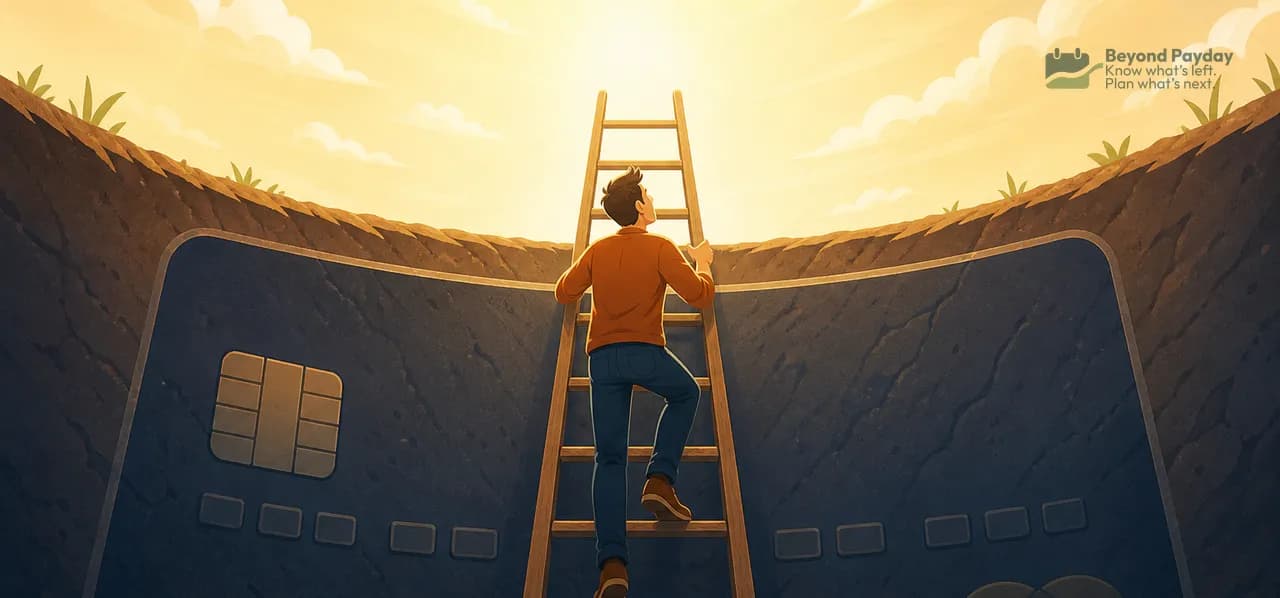
Stop new charges from piling up, understand exactly what you owe, then pick a payoff method and a way to lower the interest rate working against you. Here's the full playbook.
How does debt consolidation work — and is it worth it?
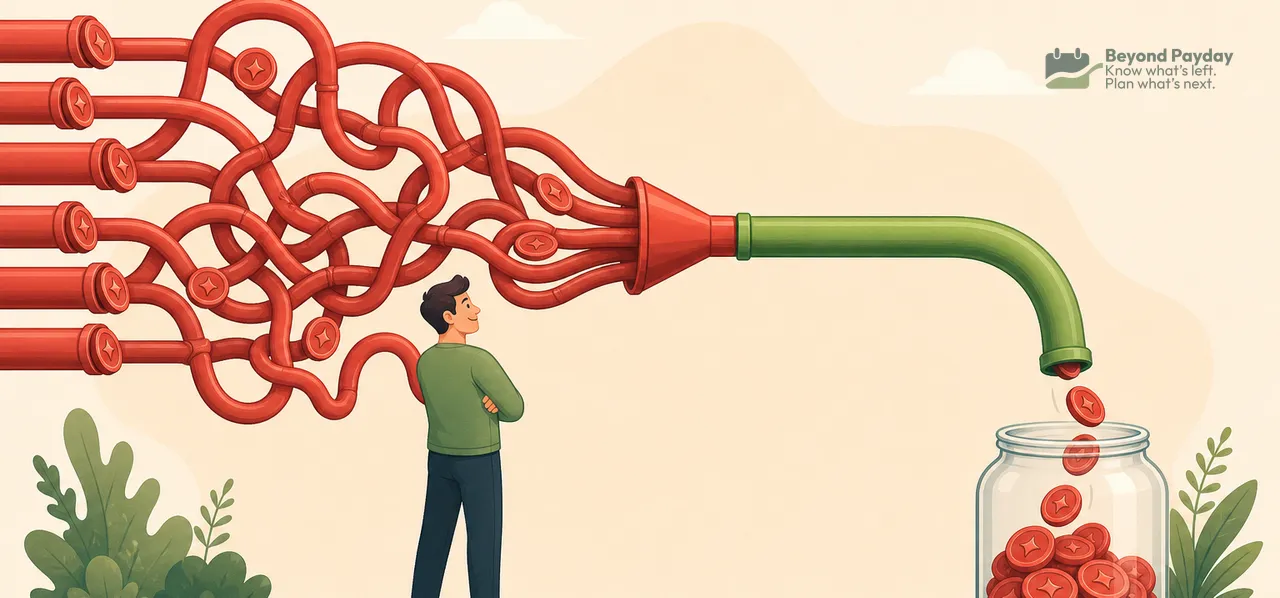
Debt consolidation combines multiple debts into one, usually at a lower rate — through a personal loan, a balance transfer, or a HELOC. It can genuinely help, or quietly make things worse.
Beyond Payday is a planning tool, not a financial advisor. This article is educational — projections and examples are estimates, not financial, tax, or investment advice.